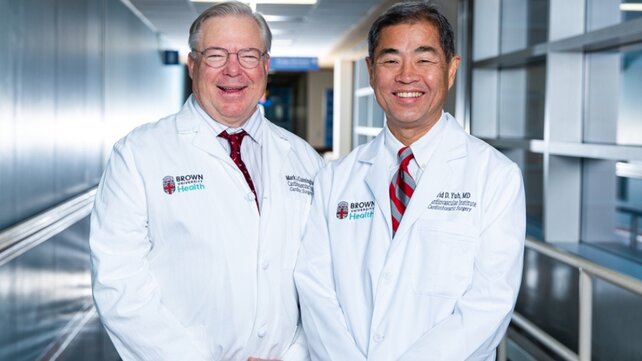

Advanced practice providers (APP) play a vital role in today's healthcare landscape. Learn more about the different types of APP and how they are essential to an ever-changing world of caring for people's health.
What is an advanced practice provider?
An advanced practice provider is a licensed healthcare professional who has completed advanced education and training. They are qualified to perform many of the same duties as a physician. Many APPs are trained in specialized fields, have extensive clinical experience, and provide compassionate care in every patient encounter. In many healthcare settings, APPs are able to diagnose conditions, manage treatment plans, prescribe medications and perform procedures.
What are the types of advanced practice providers?
There are quite a few types of advanced practice providers. Some of those most often seen by patients are physician assistants, nurse practitioners, certified nurse midwives, certified registered nurse anesthetists, or clinical nursing specialists.
Physician assistants (PA)
Physician assistants are medical professionals trained to diagnose illness, develop treatment strategies, prescribe medications, and provide care in nearly every medical setting. Their education includes rigorous classroom instruction and clinical rotations across multiple specialties. These providers train directly with physicians and are governed by the medical board.
Nurse practitioners (NP)
Nurse practitioners are registered nurses who have completed advanced graduate education and clinical training. They can specialize within their training to serve specific populations of patients, including family medicine, pediatric, acute care, psychiatric, and geriatric patients. They train with other nurse practitioners and are governed by the board of nursing. Like physician assistants, NPs can independently diagnose, treat, and manage acute and chronic conditions, including the ability to prescribe medication.
Certified nurse midwives (CNM)
Certified nurse midwives are trained to provide comprehensive care for women, including prenatal, childbirth, postpartum, and reproductive health services. Their approach is holistic, focusing not just on physical care but also emotional and social well-being.
Certified registered nurse anesthetists (CRNA)
Certified registered nurse anesthetists are highly trained professionals who provide anesthesia care before, during, and after surgical procedures. They work in hospitals, outpatient centers, and sometimes even in rural clinics where other anesthesia providers may not be available.
Clinical nurse specialists (CNS)
Clinical nurse specialists, similar to nurse practitioners, have completed advanced graduate education and clinical training and largely work with specific populations. Many CNS positions do not interact as directly with patients, however; CNS are often nurse leaders and work to support their team of nurses.
What kind of training do advanced practice providers receive?
Much like the path to attaining a Doctor of Medicine (MD) or Doctor of Osteopathic Medicine (DO) degree, the path to becoming an advanced practice provider requires extensive education and examination. Most APPs complete six to eight years of education, including undergraduate studies and graduate-level training. They must pass national certification exams and are required to maintain their credentials through ongoing continuing education to ensure they stay current with the latest evidence-based practices and medical advancements.
This comprehensive training allows APPs to perform a wide range of services, including:
- conducting physical exams
- ordering and interpreting diagnostic tests
- performing certain medical procedures
- offering patient counseling and education
How APPs are caring for patients
"In Rhode Island and across the country, advanced practice providers are central to patient care teams," says Sheri Brown, DNP, Internal Medicine at Newport Hospital. "They are ensuring timely access to care, providing expert medical services and helping improve outcomes for people in our communities." APPs work collaboratively with physician colleagues and share the same goal - providing evidence-based healthcare practice to promote good health habits.
APPs serve in hospitals, clinics, private practices, urgent care centers, surgical suites, and even home care settings. They are also key to ensuring better patient access to primary care, in the face of a shortage of physicians. "Patients can trust they are receiving excellent care with an advanced practice provider as their primary care clinician,” says Dr. Edward McGookin, chief of primary care with Brown Health Medical Group Primary Care. “They are extensively trained, highly skilled, and a vital part of the primary care workforce."
Having APPs on staff allows healthcare systems to expand capacity, reduce wait times, and offer more personalized, continuous care. An APP can often spend extra time explaining diagnoses, discussing treatment options, and ensuring that all concerns are addressed.
The role of the APP is dynamic and growing in the face of a constantly evolving healthcare landscape. These professionals are integral to every facet of healthcare and provide patients with the skilled, compassionate care needed to keep our communities healthy.



Find a Doctor