
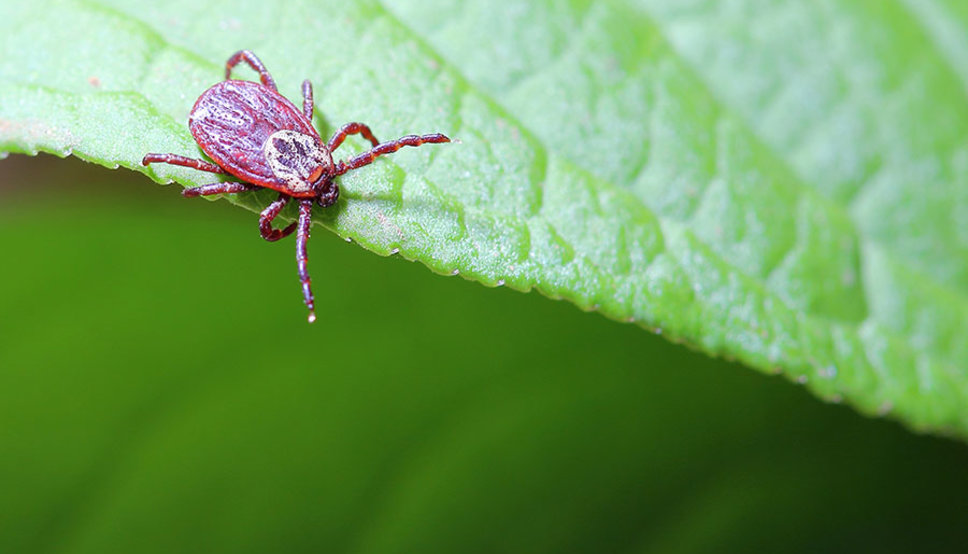
Summer is here, giving us warm weather and longer days to spend time outdoors. But be warned. Whether it is the dunes on a beach, a hike in the woods, or your own backyard, ticks can be anywhere.
These tiny bugs are more than a nuisance to avoid. They often carry diseases. That’s a bite that can take the fun right out of your summer.
Most common tick-borne illnesses in Rhode Island and Massachusetts
Here in southern New England, the most common tick-borne illnesses include:
- Lyme disease
- anaplasmosis
- babesiosis
- ehrlichiosis
Less common tick-borne illnesses include alpha-gal, Powassan, tularemia, Rocky Mountain spotted fever, Southern tick-associated rash illness (STARI), and Borrelia miyamotoi.
The deer tick, or blacklegged tick (Ixodes scapularis), carries Lyme disease, anaplasmosis, babesiosis, Powassan, and Borrelia miyamotoi. The American dog tick (Dermacentor variabilis) can carry Rocky Mountain spotted fever and tularemia. The Lone Star tick (Amblyomma americanum) can carry ehrlichiosis, alpha-gal, and STARI.
Is a tick bite serious?
When a tick that carries a disease bites you, the severity of your illness may depend on different factors.
Immune system health
Those who are very young, elderly, or immunosuppressed can have a more severe case of disease. Both diseases attack our blood cells, with anaplasma infecting our white blood cells, and babesia infecting our red blood cells. These infections can be mild in healthy individuals who are diagnosed early.
However, if you have a suppressed immune system due to a health condition or a medication, it can be more severe. The level of infected cells can be quite high, and in some cases, can lead to kidney or liver damage, respiratory distress, and shock.
The symptoms of anaplasma and babesia are very similar and include fevers, chills, sometimes night sweats, fatigue and body aches.
Stage of illness
The severity of disease also depends on how long you have been infected. This is especially true with Lyme disease. In most people, it is limited to the skin with a bulls-eye rash in the early stage. However, if you are not diagnosed and treated during that first stage, it progresses to second or third stage illness. In those stages, the infection can now involve the joints (arthritis), the brain (meningitis, Bells’ palsy, etc.), the heart (carditis), and so forth.
Increasing cases
Both the Rhode Island Department of Health and Massachusetts Department of Public Health report increases in cases of tick-borne diseases over the last 10 years. This is likely the result of a combination of increased diagnosing and reporting by clinicians, as well as an actual increase in the prevalence of diseases.
We also know that the tick burden is on the rise and spreading to areas where Lyme (and others) were previously not endemic. As a result, the combination of more awareness, increased exposure to ticks, and growth in the host animal population, including both white-footed mouse and deer, are all causes for increased concern about tick-borne illnesses.
Are all ticks dangerous?
Not all ticks are dangerous. First, the majority of ticks, including the deer tick that is most common in our area, are not carrying disease. It has been reported from prior tick testing results that around 30 to 35 percent of deer ticks are carrying Lyme (borrelia burgdorferi), and even fewer are carrying babesia or anaplasmosis.
Second, even a tick that is carrying one of these diseases does not always transmit the disease through a bite. Ticks must be fully embedded and engorged following their feeding to have been able to transmit these common diseases. The timing of this is estimated to be at least 24 to 36 hours of attachment.
How to protect yourself from ticks and tickborne illnesses
There are several strategies to help with tick bite prevention.
- Insect repellent. Apply insect repellants containing DEET to exposed skin below the neck. Much like using sunscreen, reapply every few hours.
- Permethrin. This is a repellent that is sprayed on clothing and shoes that will kill ticks on contact. It should not be sprayed on skin. Allow it to fully dry before wearing the treated clothing.
- Tick checks. The most important prevention method is a full body and scalp “tick check.” Do this on yourself, children, and pets when coming inside. This allows you to find and remove ticks before they can fully attach and embed.
- Showers. Shower immediately after being outdoors in a high-risk area as this allows for a full skin check. This can dislodge ticks before they are firmly attached.
- Heat. Throw your clothes in the dryer. The dry heat can kill any ticks that might be on your clothing.
- Pets. Work with your veterinarian to start your pets on flea and tick preventatives. Be sure to check your animals for ticks when they come in from the outside, as ticks can transfer from dogs and cats to humans through close contact.
I have been bitten by a tick. What do I do?
If you are bitten by a tick, your next step depends on how long the tick was attached, and whether it is engorged, indicating it has had a blood meal.
If you find a tick on you that is not engorged or embedded, and you know it has not been there for at least 24 hours, there is no risk to you for common tick-borne disease transmission.
If you find an engorged tick, and the timeline is more than 24 hours, call your doctor. Your doctor can discuss with you the option of a prophylactic dose of antibiotic, such as doxycycline, to help prevent a Lyme, anaplasmosis, or ehrlichiosis infection. For babesiosis, antibacterial medications such as azithromycin or quinine are generally prescribed.
For tips on how to safely remove ticks, visit the Rhode Island Department of Health page on Tick Borne Diseases for a video demonstration.
Signs of tickborne illness to watch for
In the spring, summer, and early fall, watch for symptoms of “summer flu.” These include
- fever
- chills
- joint/muscle aches
- headache/neck stiffness
- fatigue
Signs of Lyme disease
In addition to the signs above, there are other signs that are more specific for Lyme disease. Those include:
- a bulls-eye rash or expanding red circular rash
- an acute swelling of the knee or other joint, with no corresponding trauma/injury
- facial palsy with drooping mouth or eyelid (Bells’ palsy).
Signs of anaplasmosis
Anaplasmosis signs include all of the flu-like symptom, as well as nausea or vomiting, stomach pains, and occasionally a rash. Symptoms typically begin one to two weeks after infection.
Signs of babesiosis
Babesiosis symptoms include the flu-like symptoms as well as loss of appetite and a cough. Symptoms can appear within one to four weeks of infection. Babesiosis typically does not cause a rash, and about 25 percent of people infected with babesiosis show no symptoms.
Signs of ehrlichiosis
Ehrlichiosis symptoms include all of the above—fever, chills, headache, muscle soreness, rash, cough, nausea or vomiting—as well as confusion or mental impairment. Symptoms start five to 14 days after a tick bite.
Knowing how to protect yourself and what to watch for can help you stay active and enjoy this time of year outdoors. For more information, visit our website.



Find a Doctor