
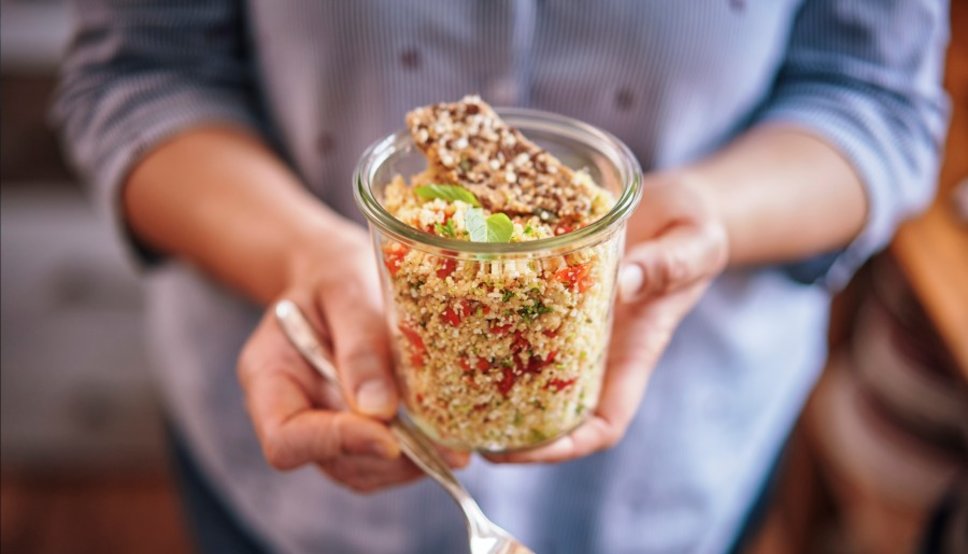
While you may be familiar with the term whole grains, the term ancient grain might be new to you. Ancient grains have been consumed for thousands of years in regions such as China, Africa, India, and the Middle East. In recent years, interest in these grains has grown in the United States as more people are seeking their nutritional benefits.
What are ancient grains?
As defined by the Whole Grains Council, ancient grains are “grains that are largely unchanged over the last several hundred years.” They have not been altered through modern practices to increase production or harvest, uniform appearance, resistance to pests, or to change their protein content. All ancient grains are whole grains, but are grown much as they were thousands of years ago and are more nutritious than refined grains, like flour or refined crackers.
Examples of ancient grains and a few fun facts about them
- Farro comes in pearled and semi-pearled form. Look for the whole grain farro. The semi-pearled form has part of the bran removed, but still contains some fiber and will be quicker to cook.
- Sorghum is a good substitute for wheat flour in baking.
- Teff is naturally gluten-free. Use as a substitute for wheat flour in baking or cook as a hot cereal or porridge.
- Millet is a tiny grain that packs several vitamins and minerals.
- Quinoa is a complete protein, as it contains all nine essential amino acids. These compounds are the building blocks of protein.
- Amaranth is also a protein powerhouse. It contains double the amount found in rice and corn.
- Spelt can often be substituted for wheat flour in most recipes, adding a slightly nuttier flavor to baked goods.
- Khorasan wheat, sometimes found under the brand name Kamut, has a sweet, nutty, buttery flavor.
- Einkorn is one of the oldest forms of wheat and can be used for sweet or savory baking with a nutty and toasty flavor.
What are whole grains?
Whole grains contain all parts of the grain—the bran, germ, and endosperm—and they retain their naturally occurring nutrients. The maintenance of its nutritional value and rich balance is maintained even if processed. This is different from refined grains, which are altered and stripped of their nutrients.
- The bran is the outer layer of the kernel and is filled with fiber, B vitamins, and minerals, such as iron, copper, zinc, magnesium, as well as antioxidants and phytochemicals—a naturally occurring chemical that plays a role in disease prevention.
- The germ is the nutrient-rich core of the seed and is filled with healthy fats, vitamin E, B vitamins, antioxidants, and phytochemical as well.
- The endosperm is the largest part of the kernel; it houses the starch (a type of carbohydrate), protein, and small amounts of vitamins and minerals.
Examples of whole grains include:
- 100% whole wheat bread
- oatmeal
- brown rice
- bulgur
When looking for something at the grocery store that is whole grain, the whole grain must be the first ingredient.
What are refined grains?
When a grain is “refined,” it is stripped of one or more of its parts. White rice and white flour are examples of refined grains as the bran and germ have been removed, giving them a finer texture and a longer shelf life. Only the endosperm remains, which significantly reduces the nutritional value.
Refining a grain removes fiber, iron, vitamins, minerals, antioxidants, and phytochemicals. As a result, refined grains often need to be "enriched," a process in which some of the lost nutrients are added back into the grain. However, enrichment does not fully restore the grain to its original form, and the final product offers a lower nutritional value compared to whole grains. Because of this, it is always advantageous to consume whole grains rather than refined grains, which are missing important nutrients that can provide health benefits.
Current nutrition guidelines on grains
Based on the 2020-2025 Dietary Guidelines for Americans, the daily grain intake recommendation varies by age. At least half of all grains consumed should be whole grains.
-
young children (12 to 23 months): one and three-fourths to three ounces equivalents of grains each day
-
individuals two and older: three to 10.5 ounces equivalents per day
What does one ounce equivalent look like?
It can be challenging to measure an ounce of a grain in certain forms. Here's a general guideline:
- one-half cup cooked rice, pasta, or cereal
- one ounce dry pasta or rice
- one medium slice of bread, tortilla, or flatbread
- about one cup ready-to-eat cereal
Health benefits of whole grains:
There are so many benefits to adding whole grains to your diet. Studies show:
- As part of an overall healthy diet, the fiber in whole grains may support healthy digestion, control your blood sugar, protect your heart, and maintain your digestive health.
- As part of a healthy diet, eating whole grains instead of refined reduces total cholesterol, low density lipoprotein (LDL), triglycerides, and risk of cardiovascular disease.
- They contain phytonutrients and minerals that may protect against inflammation and some types of cancers.
- The fiber and brain help slow down the digestion of starches into sugars, helping maintain a steady blood sugar.
- They contain more vitamins and minerals than refined grains.
- Eating whole grains can keep you feeling full longer as fiber moves slowly through the stomach. This may assist in maintaining a healthy weight. Want to see how your favorite whole grain compares? Visit Fiber in Whole Grains to explore the fiber content of different whole grains.
Ancient versus modern – which is better?
Knowing the many benefits of whole grains, you might wonder if eating ancient whole grains offers advantages over modern ones. According to the Whole Grain Council, ancient grains provide greater nutritional value than refined grains like white flour or processed crackers. They are typically richer in protein, fiber, vitamins, and minerals. However, every day modern grain staples, such as brown rice, whole grain pasta, oatmeal, and whole wheat bread also deliver many of the whole grain benefits.
The Council also reminds us that the best way to maximize nutrient intake is to include a a variety of whole grains in your diet, as each one offers its own unique benefits.
Tips for trying ancient grains
When choosing ancient grains, consider your dietary needs and preferences. The goal is to try something new and make it enjoyable!
- Many ancient grains will feature the Whole Grains Council stamp on their packaging. This stamp makes it easier to spot whole grains at the store. The 100 percent stamp is for products where all the grain is whole grain. The 50 percent stamp is for products where at least half of the grains are whole grains.
- Start simple: Choose a recipe that includes ingredients you already have in your pantry. Consider starting slowly by trying the new grain as a side dish—replacing white rice with quinoa, for example.
- Start with trying just one new whole grain every few weeks. Quinoa is a great whole grain to start with as it is easy to find in any grocery store. It can be found in the rice aisle. You can cook it on your stove top or in an Instant Pot (pressure cooker). There are even pouches of quinoa that can go directly into the microwave and cook in just a few minutes. Looking for recipes? Try these recipes from MyPlate.gov.
- Be sure to buy grains that are plain, as the pre-seasoned grains can have a high amount of sodium. Season them yourself with some extra virgin olive oil, lemon juice, and herbs and spices of your choice. You can even find blends that are a combination of multiple ancient grains all in one bag!
- For cooking tips and more recipes, including side dishes, soups, main dishes, and desserts, visit the Whole Grains Council's Recipe page.
For more information on eating well, visit the Nourish section of our Be Well health and wellness blog.



Find a Doctor