Contact Us
To contact the Movement Disorders Program at Rhode Island Hospital, call 401-444-6528.

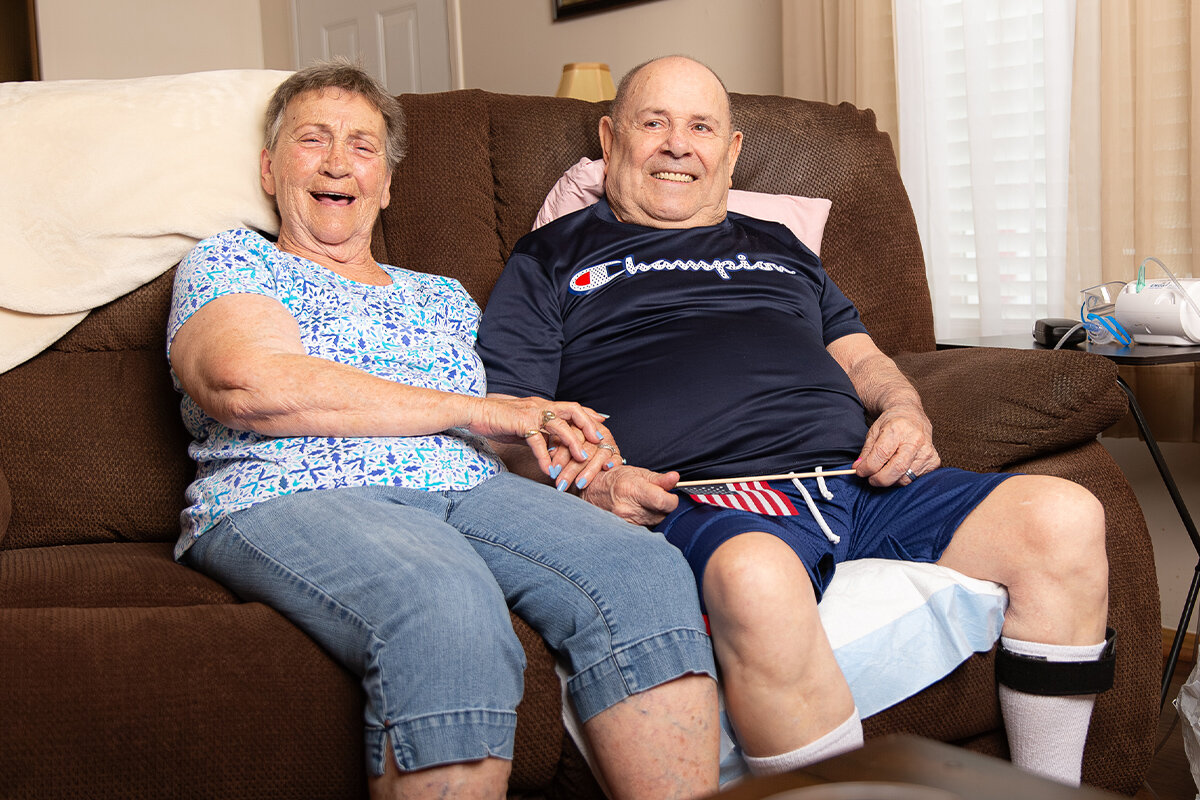
If honey had a voice, it would sound like Rita Dennis. The 80-year-old Georgia native speaks with a charming Southern drawl as she shares two intertwined stories: her nearly 20-year journey with essential tremor, and her 62-year marriage with her husband, Henry, who has been living with Alzheimer’s for the past five years.
They met at a crowded Georgia café in 1963. Henry, originally from Fall River, Massachusetts, was stationed nearby at Fort Benning. When he invited her to a movie the next day, she recalled, “I said yes because he looked like someone my father would approve of, and back then that was the way.”
Within a few months, they were married. After raising their three children, she became a certified nursing assistant and later, a physical therapist assistant.
In 2005, while living in Georgia, a persistent shaking developed on her left side. Her walking was faltering, too. At a party, she asked a friend with a diagnosis of Parkinson’s disease how her symptoms had developed. Rita remembers her response clearly. “She said to me, ‘Rita, I’ve been watching you. Please, do me a favor – go see a doctor’.”
After the results of an MRI, a neurologist ruled out Parkinson’s and prescribed a medication regiment, often an effective way to manage movement disorders. By 2016, she and Henry relocated to Tiverton, Rhode Island. But they were shadowed by Henry’s heartbreaking diagnosis and the growing realization that her medication was losing its effect. Rita’s symptoms were moving to her right side.
To contact the Movement Disorders Program at Rhode Island Hospital, call 401-444-6528.
“I couldn’t hold my hand steady to drink a glass of water without using a straw or spilling it all over me. I couldn’t shower or fix my hair or put on my make-up,” she remembers, her voice cracking with emotion. “I put Henry first — I always have. Now I was not only his caregiver, but I was also my own caregiver.”
Her primary care doctor recommended Susanne J. Patrick-MacKinnon, MD, a neurologist and director of the stroke program at Newport Hospital. Dr. Patrick-MacKinnon adjusted Rita’s medication treatment and suggested a different treatment – focused ultrasound (FUS). It is a non-invasive treatment that uses sound waves to target and treat a small area of the brain, helping to reduce abnormal brain activity and ease symptoms of movement disorders like essential tremor.
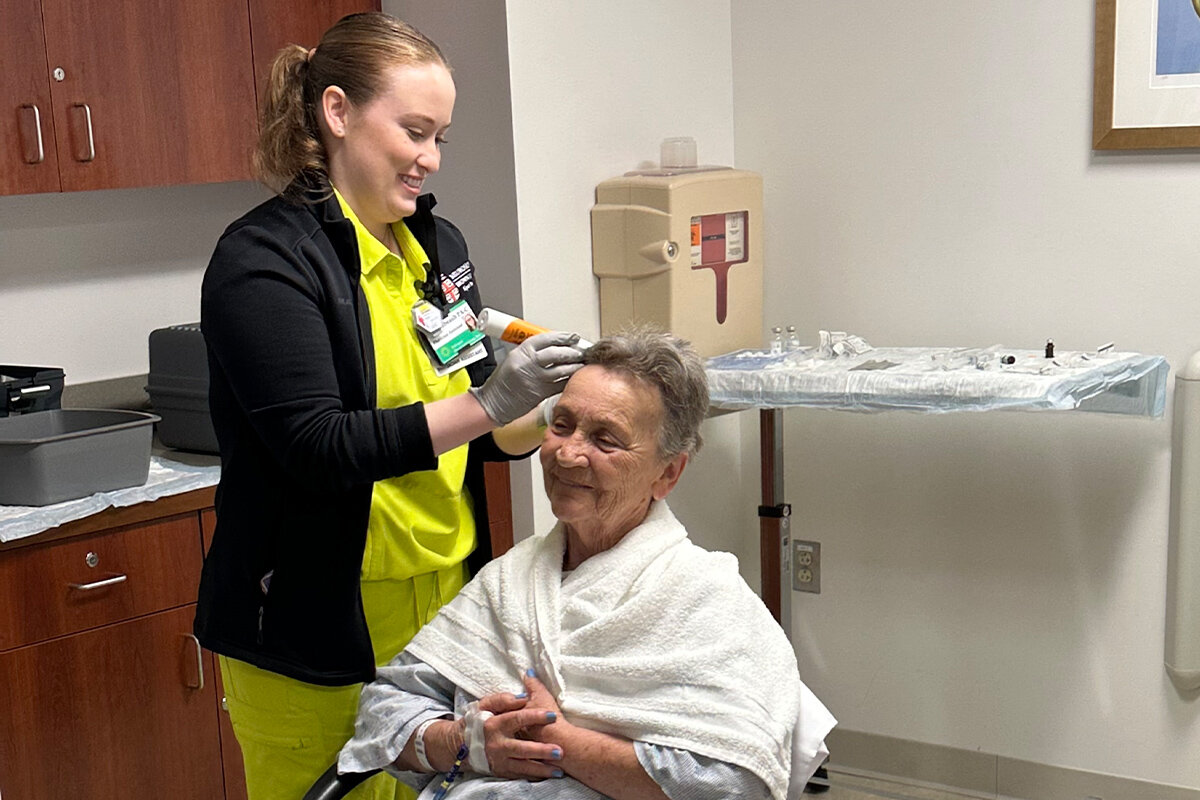
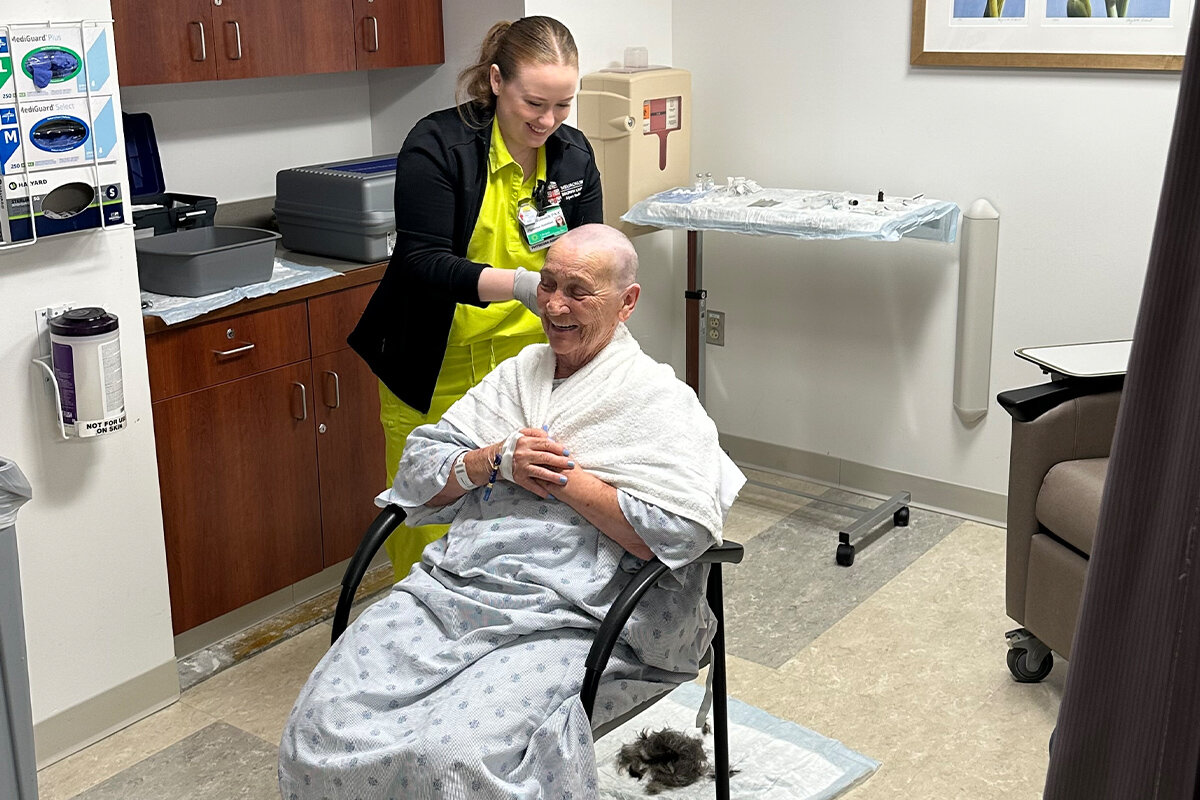
There was one aspect of the treatment that did not sit well with Rita. “I’d have to lose my hair,” she remembers, holding back tears. Because ultrasound energy does not travel well through air (the skull is made up largely of air), patients must shave their heads to help eliminate inaccurate results. After her initial despair, Rita knew that her lovely brown-and-white curls were a small price for a chance to reclaim her life.


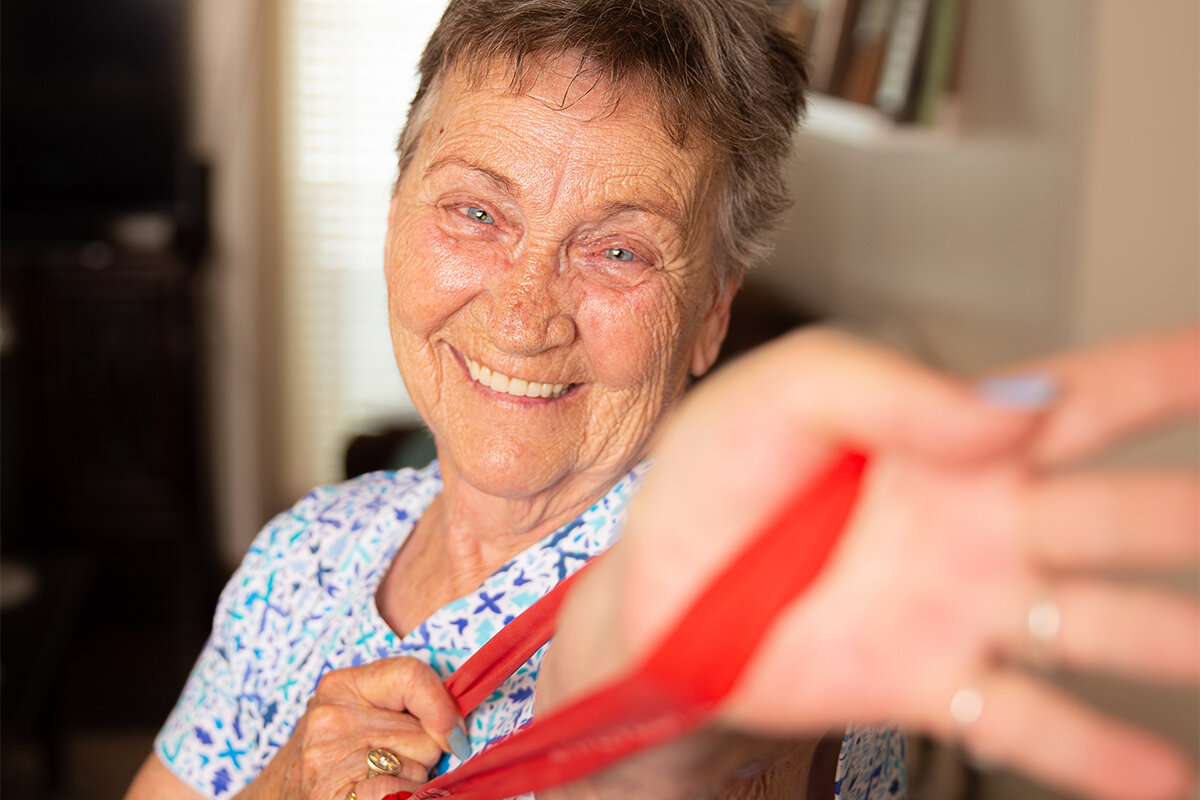
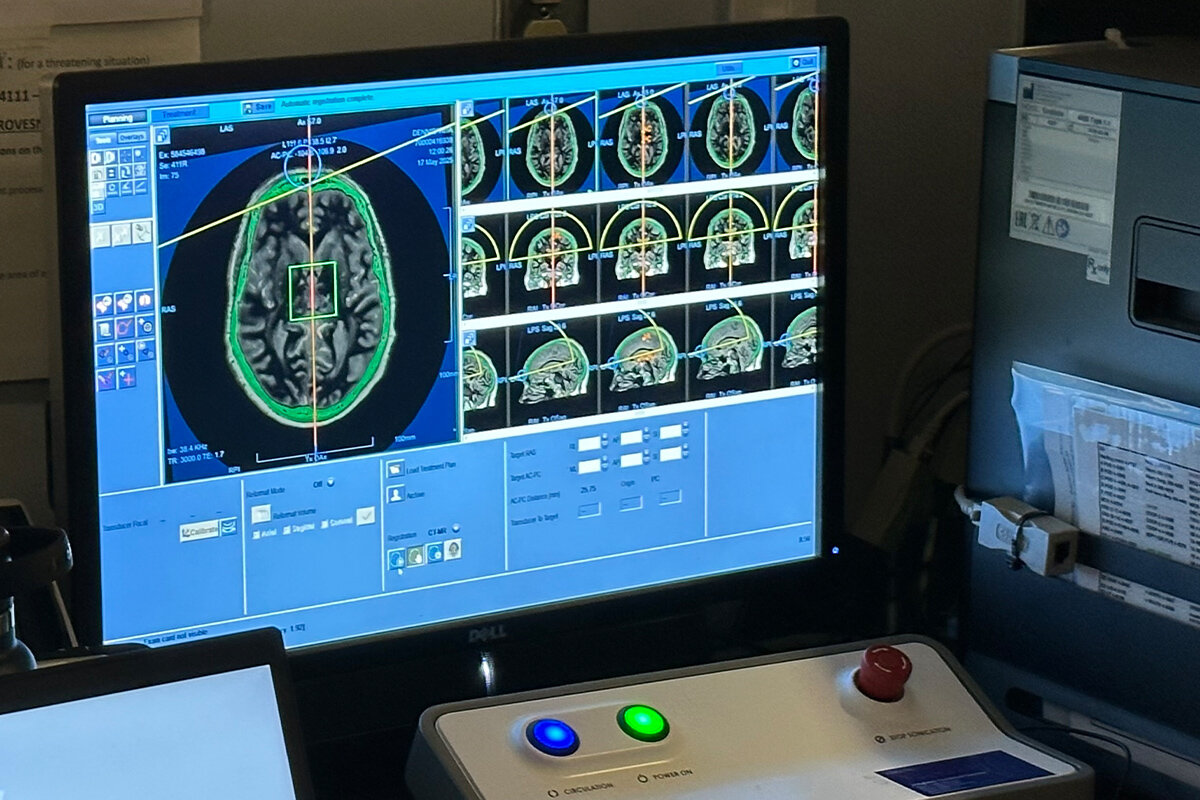
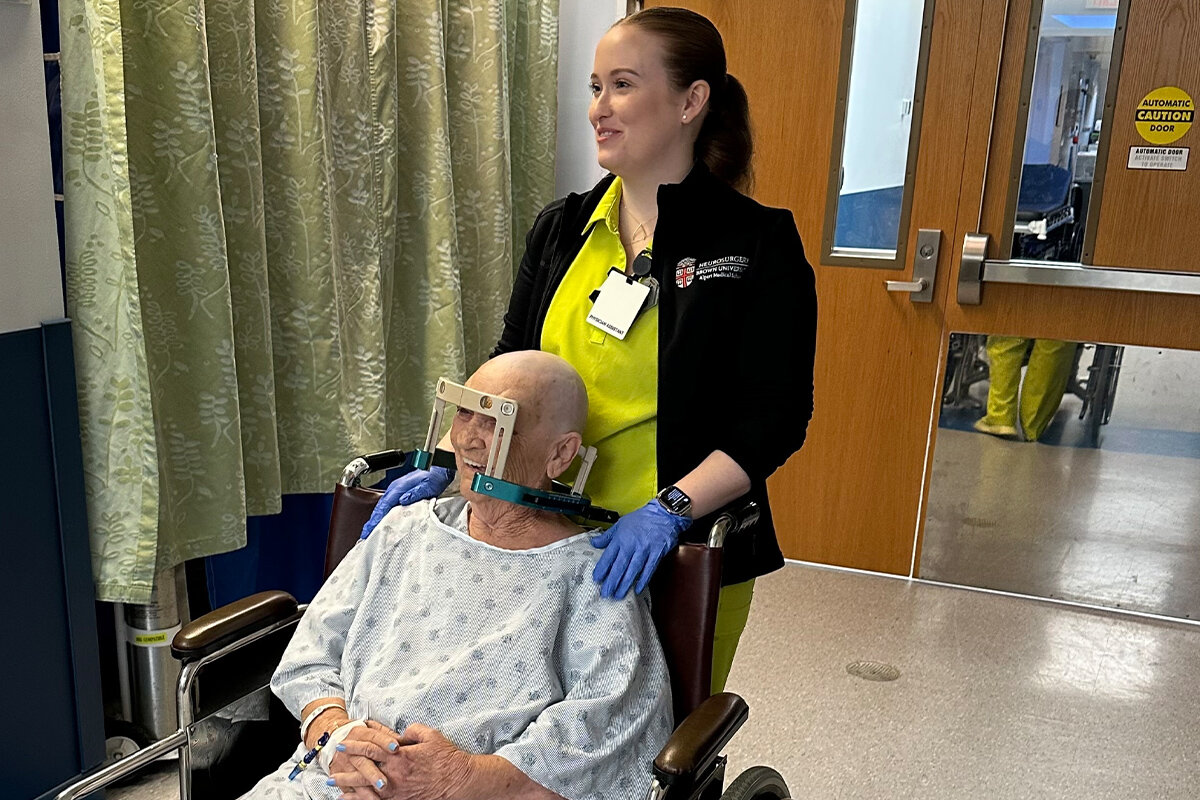
Upon Dr. Patrick-MacKinnon’s referral, Rita met first with Prarthana Prakash, MD, a neurologist with the Movement Disorders program at the Norman Prince Neurosciences Institute. Shortly after, Athar Malik, MD, PhD, a neurosurgeon with the program, performed Rita’s first procedure for her left side.
The four-hour procedure began with the shaving of her hair. Rita kept her eyes firmly closed – she did not want to see this part. With some persistent prompting from the MRI imaging clinical specialist tending to her, she finally opened them. “I told him I was afraid of what I would see. When I did finally open them, he said, ‘What I see is a pretty woman,’ and at that, I accepted it, realized it’s just hair, it will grow back. He calmed me right down.”
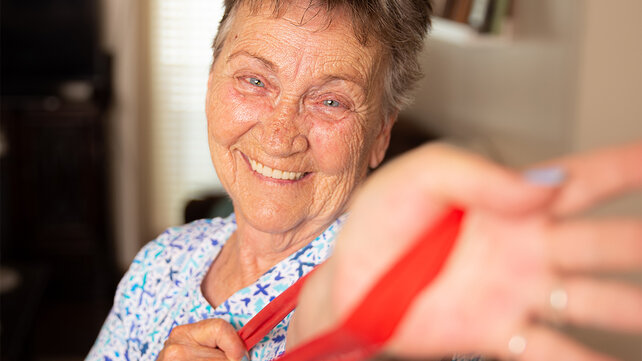
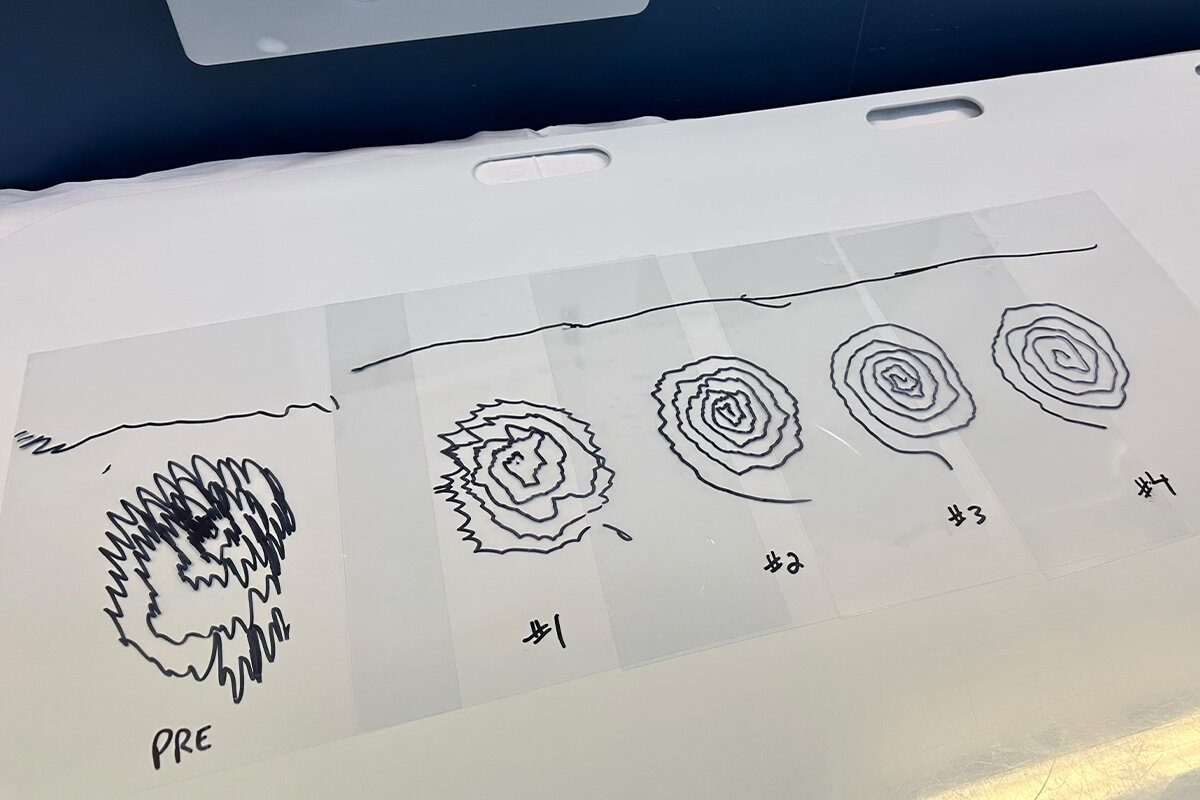
During FUS, patients remain alert. The care team monitored Rita’s progress, stopping between the rounds of ultrasound pulses to check the level of her tremors. During one test, they asked her to draw circles on paper. Another time, they had her drink water from a glass. With each pause, her circles became smoother, and the spills less. “It seemed to go so fast,” she remembered. “When they said I was done, I couldn’t believe it. I hadn’t been able to drink water from a glass without using a straw for years.” She could finally say, it was the last straw. She praised her medical team by saying, “God gives the doctors the knowledge so they can do their work.”
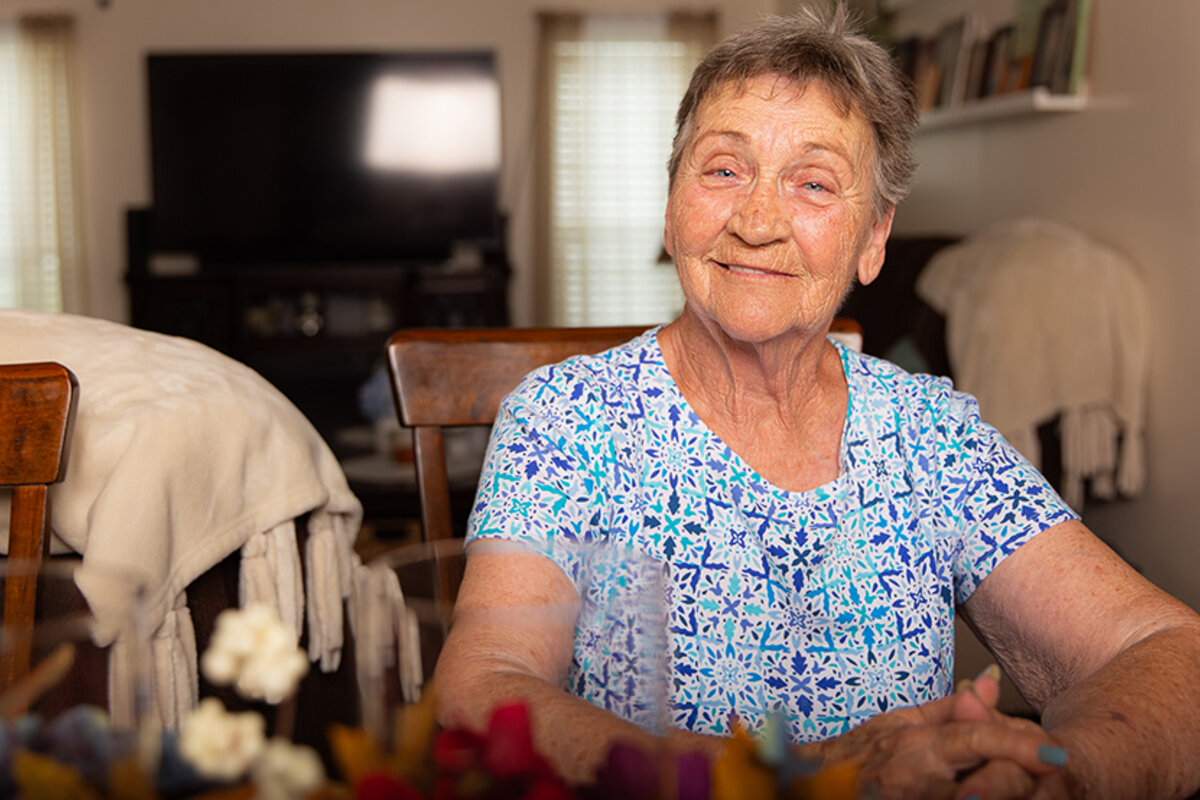
Rita’s new take on life includes a spunky pixie-cut hairstyle, fashionable wigs for special occasions, including her grandson’s wedding, and most of all – self-reliance. “I’m not afraid that I’m going to embarrass myself and take a fall at a restaurant,” she stated. “Now when we are having a barbeque, my grandchildren don’t have to fix me a plate – I can carry it on my own.”
Essential tremor is one of the most common movement disorders in the world. Having responded so well to focused ultrasound, Rita has become an unwavering advocate for others living with essential tremor, urging them not to wait to seek treatment.
“I’m gonna tell you,” she says, “people that have this condition – they should not wait. All the years I worried and suffered. Take the advice that is now mine to share — go to a doctor. Don’t suffer. Let them listen to you. They’ll probably send you to a neurologist.”
Her next procedure — for her right side — was scheduled a few days before Henry’s eighty-third birthday.
Rita reported that her second procedure was successful; that the tremors are gone and she has mobility on both sides of her body. “There’s nothing to be afraid of, she remarked, “it’s beautiful, even more beautiful the second time. I’d do it all over again.”