
What Is a Hernia?
A hernia is a defect in the abdominal musculature which allows fat or abdominal contents to protrude through this abnormal opening and cause symptoms. Hernias can occur in a variety of locations and may be different sizes. In adults, hernias do not resolve on their own and in most cases will need surgical repair. While not all hernias cause symptoms of pain or discomfort typically strenuous activities and heavy lifting can make symptoms worse.
The Comprehensive Hernia Center treats multiple types of hernias.
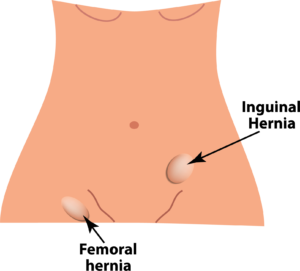
Groin Hernias
Groin hernias occur at a weak point in the abdominal wall musculature in the groin. Intestines or fat can bulge through this weakness causing a lump in the groin or on the inner thigh.
Inguinal Hernia
An inguinal hernia is the most common type of abdominal wall hernia. Inguinal hernias more commonly occur in males and may be present at birth or develop in adulthood. Typically, symptomatic inguinal hernias should be repaired electively.
Causes of inguinal hernia include:
- Weakness of the muscles and ligaments of the abdomen
- Chronic cough
- Frequent sneezing
- Frequent weight listing
- Hard physical work
- Overweight
- Constipation
- Pregnancy
Femoral Hernia
A femoral hernia is a relatively rare hernia type. These more commonly occur in females. Due to the increased risk of complications related to the hernia, it is typically recommended that this hernia be fixed regardless of symptoms.
Causes of femoral hernia include:
- Natural weakness in the femoral canal
- Increased abdominal pressure
- Muscle weakening over time
Groin Hernia Frequently Asked Questions
Frequent heavy lifting or strenuous activity that engages the abdominal wall core musculature may put you at risk for the development of a groin hernia. However, most groin hernias occur in patients without significant risk factors.
In most patients, symptomatic groin hernias present with a bulge and/or pain in the groin when engaging abdominal wall core musculature. This can happen after:
- Coughing
- Sneezing
- Heavy lifting
- Bowel movements
- Standing for long periods of time
The best way to diagnose a groin hernia is to contact your physician for a physical exam. Detecting a groin hernia during an exam is typically done by having the patient stand and cough while your doctor feels for a bulge in the groin.
Rarely, additional studies may be required to diagnose your hernia. These may include an ultrasound, CT scan, or MRI.
Treatment options include:
- Observation – After consultation with your surgeon, minor asymptomatic hernias may be observed if there are no concerning features.
- Elective hernia repair – If the hernia is causing significant symptoms your surgeon may recommend hernia repair on a non-emergent basis.
- Emergent hernia repair – If there are signs of bowel stuck within the hernia this may require emergent repair as the blood flow to the bowel may become compromised.
Surgical approaches include:
- Open hernia repair – This is done by making a small incision directly over the hernia. The hernia defect is then closed with a combination of suture material and mesh.
- Laparoscopic hernia repair – This is done with several small incisions and a laparoscopic telescope is used to visualize the hernia defect. Using this minimally invasive approach the hernia is repaired from the inside.
- Robot-assisted hernia repair – The robotic approach to hernia surgery utilizes small incisions similar to the laparoscopic approach. However, hernias that are unable to be repaired laparoscopically may be amenable to repair with a minimally invasive approach using the robotic platform.
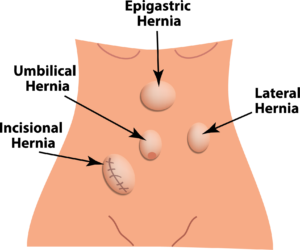
Ventral Hernias
Ventral hernias occur through a weak spot in the front (anterior) abdominal wall, allowing tissue—such as fat or part of the intestine—to bulge outward.
- Epigastric Hernia – a hernia above the belly button (umbilicus) which is commonly present at birth
- Incisional Hernia – a hernia that occurs at a previous incision site or an incompletely healed surgery site.
- Umbilical hernia – a hernia that occurs at the belly button (umbilicus)
- Spigelian Hernia- a hernia that occurs on the side of the abdomen
- Parastomal hernia – a hernia that occurs at the site of a prior or current ostomy.
Frequently Asked Questions About Ventral Hernias
There are multiple risk factors for developing hernias: previous surgery, obesity, diabetes, trauma, pregnancy, professions requiring heavy lifting, and genetics.
In most patients, the symptom of a ventral hernias is a bulge and/or pain at the hernia site. This can happen after coughing, sneezing, heavy lifting, bowel movements, or standing for long periods of time.
Rarely, a ventral hernia may become strangulated with the contents (either fat or bowel) becoming stuck within the hernia and losing its blood supply. This is an emergency and would require surgery to repair.
The best way to diagnose a ventral hernia is to contact your physician for a physical exam. Detecting a ventral hernia during an exam is typically done by having the patient lie down while the surgeon palpates the abdominal wall feeling for the hernia defect.
Additional studies may be required to diagnose your hernia. These may include an ultrasound, CT scan, or MRI.
Treatment options include:
- Observation – After consultation with your surgeon, minor asymptomatic hernias may be observed if there are no concerning features.
- Elective hernia repair – If the hernia is causing significant symptoms your surgeon may recommend hernia repair on a non-emergent basis.
- Emergent hernia repair – If there are signs of bowel stuck within the hernia this may require emergent repair as the blood flow to the bowel may become compromised.
Surgical approaches include:
- Open hernia repair – This is done by making a small incision directly over the hernia. The hernia defect is then closed with a combination of suture material and mesh.
- Laparoscopic hernia repair – This is done with several small incisions and a laparoscopic telescope is used to visualize the hernia defect. Using this minimally invasive approach the hernia is repaired from the inside.
- Robot-assisted hernia repair – The robotic approach to hernia surgery utilizes small incisions similar to the laparoscopic approach. Hernias that are unable to be repaired laparoscopically may be amenable to repair with a minimally invasive approach using the robotic platform.