Contact the Pediatric Epilepsy Program
For more information or to schedule an appointment, please call 401-444-5685.

The Pediatric Epilepsy Program at Hasbro Children's provides the most comprehensive care in the region to children and adolescents suffering with epilepsy. Our multidisciplinary team of experts is dedicated to identifying the best treatment options for pediatric epilepsy so that patients can keep the condition under control and preserve a high quality of life.
Epilepsy is a neurological disorder that causes repeated seizures due to abnormal bursts of electrical activity in the brain. These disruptions interfere with normal communication between nerve cells, leading to changes in a person’s awareness, movement, sensations, or behavior.
An epileptic seizure can be described as an electrical storm in the brain. During a seizure, groups of neurons send signals all at once and much faster than normal. This sudden surge can cause symptoms ranging from brief staring spells to muscle jerks or loss of consciousness.
Epilepsy can occur at any age. But when it occurs frequently in a child’s still developing mind, it can affect cognitive growth, language, and social skills. Early and aggressive treatment is often critical to prevent long-term developmental challenges.
When epilepsy is diagnosed early, doctors can start treatment sooner, which makes a lifetime of difference by helping to:
When epilepsy is detected early in a child’s development, it can lead to better outcomes for a healthy, thriving future.
Epilepsy can look different from child to child, but most cases fall into five main syndromes. Knowing about these can help parents understand what to expect, because each one starts at a different age and has its own symptoms, treatment options, and outlook for the future. Below are some concise details to keep in mind:
Age of onset: 4–10 years
Symptoms: Brief staring spells, unresponsiveness, subtle eye fluttering; often mistaken for daydreaming.
Treatment: Ethosuximide or valproate; usually responds well.
Outcomes: Most children outgrow it by adolescence; normal development expected.
Age of onset: 6–8 years
Symptoms: Twitching or tingling of face and tongue, speech difficulty; seizures often occur at night.
Treatment: Often no medication needed; mild anti-seizure drugs if required.
Outcomes: Seizures typically stop by early teens; normal cognitive development.
Age of onset: Around puberty (12–18 years)
Symptoms: Sudden jerks of arms or shoulders, especially after waking; may also have generalized seizures.
Treatment: Lifelong medication; avoid sleep deprivation and alcohol.
Outcomes: Usually well-controlled with medication; rarely outgrown.
Age of onset: 3–12 months
Symptoms: Clusters of brief spasms—bending forward, arms flinging out; often after waking.
Treatment: ACTH injections, vigabatrin, ketogenic diet; urgent treatment needed.
Outcomes: High risk of developmental delays; early treatment improves prognosis.
Age of onset: 1–8 years
Symptoms: Multiple seizure types, developmental regression, cognitive impairment.
Treatment: Combination of medications, ketogenic diet, sometimes surgery.
Outcomes: Chronic condition; seizures often persist into adulthood.
For more information or to schedule an appointment, please call 401-444-5685.
Every child’s epilepsy journey is as individual as they are. So is every child’s treatment. Once a child’s epilepsy is properly diagnosed, physicians can develop effective treatment that factors in a child’s age, symptoms and seizure type, underlying causes, developmental status, and response to medication. These individual care plans often include:
Individual treatment will vary depending on causes and symptoms. Physicians will collaborate with patients, families, and caregivers to provide the plan that addresses the condition, within the lifestyle and parameters of everyone involved.
Epilepsy is one of the most common neurological conditions in children. Parents often have questions about what causes it, how it’s diagnosed, and what to do during a seizure. Here are some quick answers to frequent questions that will help you understand and act with confidence:
Epilepsy occurs when brain cells send abnormal electrical signals. Causes include genetics, brain injury, infections, or sometimes unknown reasons.
Doctors use a child’s medical history, physical exam, and tests like EEG (brain wave test) and MRI to confirm epilepsy.
Children often have different seizure types and may outgrow some forms. Their developing brains make early treatment especially important.
Some types go away as children grow. Others need lifelong treatment, but most can be well controlled with medication.
Common types include absence seizures (staring spells), focal seizures (one part of the body), and generalized seizures (whole body).
Stay calm, keep them safe by moving objects away, and gently turn them on their side. Do not put anything in their mouth.
Call 9-1-1 if the seizure lasts more than five minutes, your child has trouble breathing, becomes injured, or has repeated seizures without recovery.

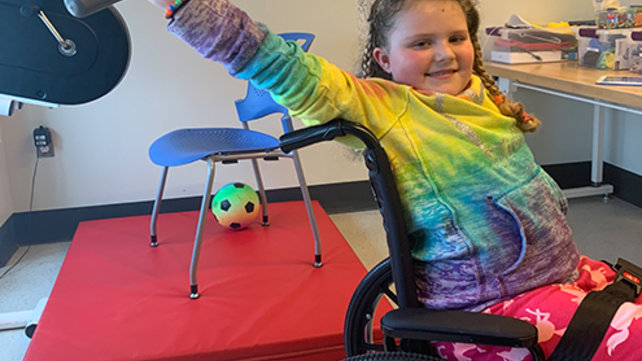
Sophie, suffering from seizures and the side effects of the medications designed to stop them, turned to Hasbro Children’s for a specialized brain surgery aimed at curing her epilepsy. Today she is full of energy and enjoying her life again.
Eight-year-old Olivia Mullaney was just like her friends: young, healthy, full of life, a lover of sports, and a very active child.
Support from our donors advances the mission of the Pediatric Epilepsy Program.