
Contact the Pharmacy Residency Program
Program Director, Rhode Island Hospital
Shriji Amin, PharmD, MBA, BCCCP
[email protected]

PGY-2 pharmacy residency programs build on Doctor of Pharmacy (PharmD) education and PGY-1 pharmacy residency programs to contribute to the development of clinical pharmacists in specialized areas of practice. PGY-2 residencies provide residents with opportunities to function independently as practitioners by conceptualizing and integrating accumulated experience and knowledge and incorporating both into the provision of patient care or other advanced practice settings. Residents who successfully complete a PGY-2 pharmacy residency are prepared for advanced patient care, academic, or other specialized positions, along with board certification, if available.
The purpose of the Rhode Island Hospital PGY-2 emergency medicine pharmacy residency is to provide advanced training in the field of emergency medicine and to prepare graduates to function independently as clinical pharmacist specialists in emergency medicine or as faculty. Program graduates will be prepared for board certification in emergency medicine pharmacy.
Program Director, Rhode Island Hospital
Shriji Amin, PharmD, MBA, BCCCP
[email protected]

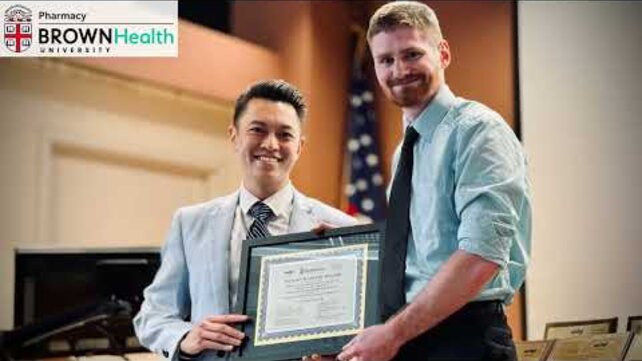
Brown University Health is pleased to offer a variety of pharmacy residency programs accredited by the American Society of Health-System Pharmacists (ASHP).
The residency program will provide the resident with specific learning/practice experiences designed to enable the resident to expand the scope of their clinical practice skills. The program objectives and goals are based on American Society of Health-System Pharmacists (ASHP) standards, which reflect our program’s purpose.
Program graduates will be prepared to function independently and act as essential members of an interdisciplinary team caring for emergency department patients. Further, graduates will be prepared to function as adjunct faculty for pharmacy students on rotation and in classroom learning experiences at a college of pharmacy. Finally, graduates will be prepared for board certification in emergency medicine pharmacy.
The resident is expected to achieve the objectives of the residency program related to both administrative and professional practice skills. The resident reports to and is supervised by the rotation preceptor and the residency program director. During staffing, the resident is under the supervision of the pharmacist in charge.
Hours of practice vary according to the requirements set forth by the preceptor and director. The resident is expected to be present in body, mind, and spirit at all assigned activities of the service they are currently a part of, including medical staff rounding, clinic visits, and administrative activities. An eight-hour day is expected for physical presence on site during assigned workdays.
The residency program is the resident’s most important commitment. Working extra shifts outside the residency program requirements (moonlighting) is strongly discouraged, especially at the beginning of the residency. To work overtime, the resident must be trained in the area. Extra work moonlighting and overtime work must be requested through and approved by the residency director and hours worked will be reported on a monthly basis by each resident. Consideration will be given to residency workload and deliverables assigned and resident standing within the program.
The resident will staff in the inpatient pharmacy every fourth weekend for a minimum of 18 weekend shifts. The PGY-2 emergency medicine resident will staff for one 8-hour weekday shift once per month, and one weekend (Saturday and Sunday, eight-hour shifts) in emergency department every 4 weeks. Resident will staff on up to three holidays at the discretion of pharmacy department needs. Recognized hospital holidays include New Year’s Day, Martin Luther King Jr. Day, Memorial Day, Independence Day, Labor Day, Thanksgiving, and Christmas.