
Contact the Pharmacy Residency Program
Program Director, PGY-1 Community-Based Pharmacy Residency Program
Lyndsey Wiggin, PharmD, MHA, BCACP
Phone: 401-444-9909
Email: [email protected]

PGY-1 residency programs build upon the Doctor of Pharmacy (PharmD) education and outcomes to develop pharmacist practitioners with knowledge, skills, and abilities as defined in the educational competency areas, goals, and objectives. Residents who successfully complete PGY-1 residency programs will be skilled in diverse patient care, practice management, leadership, and education, and be prepared to provide patient care, seek board certification in pharmacotherapy (i.e., BCPS), and pursue advanced education and training opportunities including postgraduate year two (PGY-2) residencies.
Program Director, PGY-1 Community-Based Pharmacy Residency Program
Lyndsey Wiggin, PharmD, MHA, BCACP
Phone: 401-444-9909
Email: [email protected]

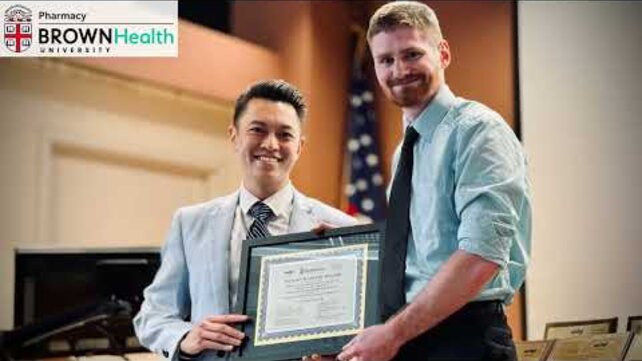
Brown University Health is pleased to offer a variety of pharmacy residency programs accredited by the American Society of Health-System Pharmacists (ASHP).
The residency program offers structured learning/practice experiences designed to expand the resident’s clinical and professional skill set. Program goals and objectives goals are aligned with the ASHP standards and reflect our commitment to preparing residents for advanced pharmacy practice.
This program is designed to develop the knowledge and abilities necessary to succeed in a variety of community-based settings, including chronic disease management, medication therapy management (MTM), specialty pharmacy services, primary care, and clinic-based care. It also provides a strong foundation for those pursuing a PGY-2 residency in ambulatory care.
Training emphasizes access, dispensing, adherence, and clinical management across a broad range of chronic and specialty disease states. Residents also gain exposure to key administrative areas such as research, accreditation, quality improvement, and pharmacy operations.
Graduates of the program will be well-prepared serve as adjunct faculty for pharmacy students in both experiential and didactic settings. Additionally, they will be well equipped to pursue board certification in pharmacotherapy.
The resident is expected to achieve the objectives of the program across both administrative and clinical practice domains. Supervision is provided by the rotation preceptor and the residency program director. During staffing shifts, the resident is under the supervision of the pharmacist in charge.
Work hours may vary based on the requirements set by the preceptor and program director. The resident is expected to be fully engaged – physically, mentally, and professionally - during all assigned activities, including clinic visits and administrative responsibilities. A standard eight-hour workday is expected for on-site presence during scheduled workdays.
The residency program is the resident’s primary professional commitment. Working additional shifts outside the program requirements (moonlighting) is strongly discouraged, particularly at the beginning of the residency. To be eligible for overtime work, the resident must be appropriately trained in the area and must submit a formal request for approval by the residency director. All moonlighting and overtime hours must be reported monthly. Approval will be based on current residency workload, assignments, and the resident's standing within the program.
The residency program includes both required/core and elective rotations. These rotations are structured as either calendar-month rotations typically four weeks in duration) or longitudinal experiences that span multiple blocks throughout the 52-week program. This format allows residents to gain both concentrated and ongoing exposure to key practice areas.
Required/core rotations:
Elective rotations:
Longitudinal rotations:
Please note that some learning experiences are located off the main campus and/or Brown University Health Specialty Pharmacy. The resident will be responsible for their own transportation. Parking at all locations is free. No travel reimbursement is provided for these experiences.
Pharmacy practice staffing responsibilities are every fourth weekend plus one weekday (morning or evening) every week. Weekend shifts are 8:00 a.m. to 4:30 p.m.
Residents are responsible for staffing two holidays per year. Recognized hospital holidays include New Year’s Day, Martin Luther King Jr. Day, Memorial Day, Independence Day, Labor Day, Thanksgiving, and Christmas Day.