
Medical Imaging Center

Diagnostic and Interventional Medical Imaging

A complete range of diagnostic and interventional procedures are available in general radiology and in subspecialty areas. Our diagnostic imaging equipment reflects the latest advances in imaging science, including radiation dose reduction capabilities. 

Our hospitals’ medical imaging service continually upgrades its equipment, which is state of the art, and designs our protocol to minimize patients’ exposure to radiation. Our board-certified radiologists read and interpret all images and report results to your physician.

With patients’ convenience in mind, appointments are available days, evenings, and weekends at multiple locations. Staff are also available for emergency procedures 24 hours a day, seven days a week.

Supporting Physicians and Their Patients

Our experienced teams offer consistent quality to your patients and handle the administrative heavy lifting for your medical office. Learn more about our locations through Rhode Island and Massachusetts, and how to refer with confidence to Brown University Health Medical Imaging.

Brown University Health Medical Imaging Referral Guide (PDF)

What Is Medical Imaging?

Medical imaging uses advanced technology to create pictures of the inside of the body. At a basic level, it works by using different forms of energy such as sound waves, magnetism, or low levels of radiation to gather information from inside the body. 

Depending on the type of exam, this energy passes through the body or reflects off organs, bones, and tissues in different ways. A computer then translates those signals into detailed images that healthcare providers can view. 

Medical imaging is an essential part of modern healthcare. Tests such as X rays, CT scans, MRI, and ultrasound allow providers to look inside the body without surgery and better understand what’s happening beneath the surface.

Advanced Imaging Technology and Expertise 

High quality medical imaging combines advanced technology with expert interpretation. At Brown University Health, imaging exams are selected carefully and performed using modern, state-of-the-art equipment designed to deliver clear, detailed images. 

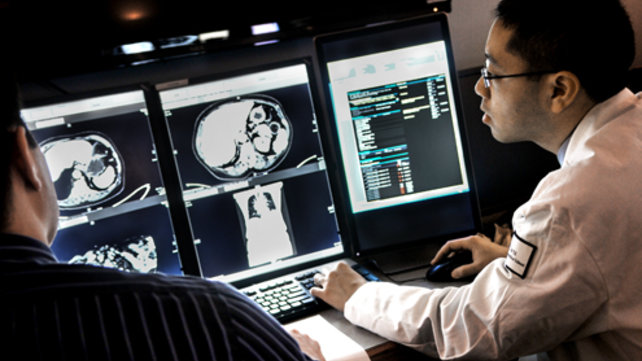
Imaging studies are interpreted by board-certified radiologists with specialized training across many areas of care. Their expertise, combined with advanced tools such as 3D imaging and low dose radiation technology, helps ensure accuracy while keeping patient safety in mind. 

By bringing together innovative technology and experienced imaging specialists, Brown University Health supports precise results that providers can trust when making care decisions.

Cutting Edge Imaging Equipment and Techniques 

Brown University Health imaging locations use modern equipment designed for precision, safety, and patient comfort. Technologies may include:

  • High resolution and 3D imaging
  • Advanced MRI and CT scanners
  • Low dose radiation technology for certain exams

These tools help radiologists see detailed images while reducing the need for repeat testing.

Imaging for Preventive Care and Screening 

Medical imaging also supports preventive care and early detection. Screening exams can help identify certain conditions before symptoms appear, when treatment may be most effective. 

Common examples include: 

  • Mammograms to screen for breast cancer 
  • Low dose CT scans for lung cancer in high risk patients 
  • Bone density scans to assess osteoporosis
  • Ultrasound exams to check blood vessels or abdominal organs 

Your provider may recommend imaging based on your age, medical history, or risk factors. While not everyone needs imaging screening, your care team will help determine what’s appropriate for you.

Why Choose Brown University Health for Medical Imaging 

Brown University Health makes it easy to get the imaging care you need, close to home. With many convenient locations across Rhode Island and southern Massachusetts, patients have access to high quality imaging without unnecessary travel or long waits. 

Scheduling an imaging exam is straightforward, and results are shared quickly with your doctors. From your first phone call or online scheduling to the moment results are shared, you’re supported by a skilled, experienced care team. Imaging exams are performed by trained technologists and interpreted by board certified radiologists, with a focus on accuracy, safety, and clear communication. 

Because imaging is part of the broader Brown University Health network, your care doesn’t happen in isolation. Radiologists, referring providers, and specialists stay connected, so results are shared quickly and next steps are coordinated with your overall care in mind. When you choose Brown University Health for medical imaging, you’re choosing trusted expertise, easy access, and a seamless care experience every step of the way.

Pediatric and Specialized Imaging Services 

Brown University Health provides pediatric imaging in a supportive, child friendly environment. Imaging teams are trained to help children feel comfortable and safe throughout their exam. 

Specialized imaging services are also available for patients with complex or specific medical needs.

Types of Medical Imaging Exams

  • Bone Density: Testing for osteopenia and osteoporosis screenings and diagnosis.
  • Breast Imaging: A range of services for the diagnosis of breast disease, including digital mammography and tomosynthesis, a new type of digital mammogram that provides three-dimensional images. All locations are ACR/FDA certified, with Anne C. Pappas Center for Breast Imaging and Newport Hospital recognized as Breast Imaging Centers of Excellence.
  • CT Scan: General head and body imaging in addition to interventional procedures.
  • General Radiology: Routine and emergency fluoroscopic and diagnostic radiology for a range of disorders and diseases.
  • MRI: Brain, spinal cord, cardiac, and head examinations. Open MRI is a comfortable option that provides patients with extra space, alleviating the feeling of claustrophobia, which, for some, makes these types of scans difficult. Open MRI is effective for a variety of procedures, including orthopedic imaging; neurological imaging; vascular imaging; abdomen and pelvis imaging; face and neck imaging; and breast imaging.
  • Nuclear Medicine: Organ function studies with radiopharmaceuticals.
  • Center for Pediatric Imaging: Routine and urgent radiographic, fluoroscopic, ultrasound, MRI and CT examination of pediatric patients.
  • PET CT: Detection of specific cancers, heart disease and neurological disorders.
  • Ultrasound: Diagnostic ultrasound examinations, including abdominal, pelvis, OB, ultrasound-guided biopsies and fluid aspirations.
  • Interventional Radiology: Utilizing imaging guidance (fluoroscopy, CT, ultrasound) to perform minimally-invasive procedures, treating a wide variety of conditions such as stroke, cancer, arterial and venous disease, and uterine fibroids. Routine procedures such as PICCs, dialysis catheters, port insertions, and joint injections are frequently performed.

Safety, Comfort, and Patient Care 

Your safety and comfort remain a priority during every imaging exam. Imaging teams follow established safety guidelines and use the lowest appropriate radiation dose when radiation is needed. 

Many imaging tests, including MRI and ultrasound, do not use radiation at all. Staff are available to support patients who may feel anxious, uncomfortable, or claustrophobic and can offer accommodations when needed.

How to Prepare for an MRI or CT Scan 

Preparation for an MRI or CT scan depends on the type of imaging test. Before your appointment, you’ll receive instructions explaining:

  • Eating or drinking guidelines
  • What to wear 
  • How long the exam may take

If you have questions or concerns—such as anxiety, implanted medical devices, or mobility needs—your care team can help you prepare.

Medical Imaging Locations

Center for Pediatric Imaging

Rhode Island Hospital Main Building/Zecchino Pavillion
593 Eddy Street, Main Building
Providence, RI 02903 Get Directions