Making Healthy Eating Simple and Affordable

Americans are bombarded with advice to “eat healthy,” yet the reality is far more complicated. The Pew Center reports that nearly 90 percent say healthy food has become more expensive, and 69 percent report that rising prices make it harder to maintain a nutritious diet—contributing to chronic conditions that now affect six in 10 adults nationwide.

Against this backdrop, Jeanette Nessett, RDN, LDN, is helping communities discover that eating well doesn’t have to break the bank. As a Community Outreach Specialist, she has taught and now manages the Food Is Medicine program at Brown University Health’s Community Health Institute. As a trained dietitian and authority on healthy eating, she’s showing families how simple, affordable choices can transform health.

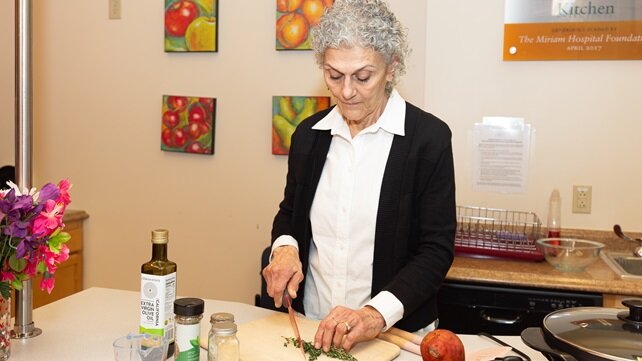
Jeanette Nessett, from the Brown University Health Community Health Institute, showing demonstrating healthy cooking in their test kitchen.

Food Is Medicine

This four-week class teaches participants how to prepare nutritious meals that can improve their well-being on a limited budget. Participants observe preparation of one dish each week, sample the recipe and learn how to decrease their risk of obesity and related chronic diseases. 

To learn more about this free course contact Jeanette Nessett at [email protected] or call 401-444-8088.

The program was developed by Mary Flynn, PhD, RD, LDN, a research dietitian at The Miriam Hospital and associate professor of medicine with Brown University. The free program teaches participants how to prepare nutritious meals on a budget with minimal cooking skills. 

Its impact is changing the way New Englanders eat. “People often say they didn’t realize how easy it could be to eat healthy without spending a lot of money and time,” Nessett shares. “Our program changes their perspective on feeding a family nutritiously for less.”

Breaking Down Barriers

One of the biggest misconceptions Nessett encounters? Eating healthy is expensive. Not so she says. “It’s possible to shop on a budget and eat well.” The program even helps families who rely on food pantries by using ingredients commonly available there. The program was originally developed in collaboration with the Rhode Island Community Food Bank.

Healthy Kitchen Staples

What should every household keep on hand? Nessett recommends:

  • A variety of fruits and vegetables
  • Lean proteins like fish, poultry, and legumes
  • Healthy fats such as extra virgin olive oil
  • High-fiber carbohydrates like whole grains, breads, rice, and pasta
  • Nuts and seeds for added nutrition

Why Chronic Disease Persists

Despite knowing what’s healthy, society struggles with obesity and diabetes. Nessett points to ultra-processed foods. “They’re engineered to be high in fat, sugar, and salt,” she says. “They are not simple foods from the earth. We all need to eat closer to the earth and less processed. Food should look like what it is and have minimal processing and additives.”

Getting Started

Her advice for anyone ready to lean into healthy eating is simple. “Start by adding more fruits and vegetables daily. Swap white bread and flour products for whole grains,” she states. “Small changes make a big difference.”

Beyond Food Is Medicine

Nessett also helps lead the Community Health Institute’s A Taste of African Heritage, a course celebrating fresh foods and cultural traditions from across the African Diaspora. It encourages participants to prepare native dishes with healthier techniques, lower sodium, healthy fats, and vibrant spices.

Eat Real Food

Nessett’s mantra for healthy eating is simple. “Eat close to the earth. You don’t have to break the bank to eat a nutritious diet,” she advises. “Enjoy your food and make it contribute to your good health.”

Learn more about free food-related programs and other offerings with the Brown University Health Community Health Institute